Cameron McDonald, Associate Member, Immigration and Human Rights Law Review
I. Introduction
The U.S. immigration detention system has undergone a fundamental transformation since the start of the first Trump Administration, evolving into a structure that human rights advocates and scholars have identified as a modern iteration of the concentration camp.[1] Concentration camps, by definition, are places where individuals are imprisoned not for criminal acts, but because of their status.[2] For the first time in U.S. history, immigrants with no criminal record now constitute the largest population in U.S. Immigration and Customs Enforcement (“ICE”) detention.[3] As of February 7, 2026, nearly seventy-five percent of all immigrants detained—approximately 50,000 individuals—have never been convicted of a criminal offense.[4]
The shift towards mass civilian detention based solely on status violates international human rights standards established by the Office of the High Commissioner for Human Rights (“OHCHR”), including protections against arbitrary detention and guarantees of liberty, due process, judicial review, and equal protection under the law.[5]
This blog examines the expansion of immigration detention and its implications regarding fundamental human rights and constitutional protections. Part II provides background on the escalation of U.S. immigration enforcement in 2025, specifically the unprecedented shift towards mass status-based detention and the historical foundations of the term “concentration camp.” Part III discusses the resulting legal and human rights crises through both international human rights frameworks and constitutional law while proposing reforms. Finally, Part IV concludes by emphasizing that recognizing these facilities as concentration camps serves a necessary warning: unchecked normalization of mass detention systems leads to profound human rights tragedies.
II. Background
The OHCHR serves both as a current protector of human rights and as a reminder of past domestic and international tragedies, including the Japanese American internment during World War II and the 1933 establishment of Dachau, the first of more than 44,000 Nazi concentration camps.[6] Whether labeled “internment camps” or “detention centers,” concentration camps historically begin with the removal of a minority group from the general population under the implicit consent of society.[7] Recognizing modern detention centers as concentration camps therefore functions as a critical warning: institutionalized human rights tragedies emerge when mass civil detention is normalized without meaningful legal restraints.[8]
Decisions such as Noem v. Perdomo reflect an erosion of fundamental legal protections, raising a critical question: whether the legal doctrines enabling mass civil detention are undermining core constitutional and human rights guarantees in the United States.
The historical and legal landscape of U.S. immigration enforcement underwent another fundamental transformation at the start of President Trump’s second term.[9] The current system increasingly emphasizes mass civil detentions based on status rather than individualized public safety concerns.[10] Understanding this shift requires examining the evolution of U.S. immigration detention, the historical foundations of the term “concentration camp,” and the humanitarian crises emerging within these facilities.
A. Evolution of Status-Based Detention
The legal architecture of U.S. immigration enforcement has evolved from a system grounded in individualized, time-intensive decisions into what scholars describe as a “Deportation-Industrial Complex.”[11] Historically, detention functioned as a limited, short-term mechanism determined on a case-by-case basis tied to individualized immigration proceedings.[12] While the Supreme Court in Wong Wing v. United States established detention as a permissible tool in the removal of noncitizens, it also clarified that unlawful residency is not a crime.[13] The modern system, however, increasingly blurs the line between civil detention and punitive incarceration, particularly as the number of noncriminal detainees continues to rise.[14]
The expansion of noncriminal detention during President Trump’s second administration stems in large part from executive directives calling for “the largest domestic deportation operation in American history,” which includes a target of 3,000 immigration arrests per day.[15] President Trump attempts to justify increased deportations and detentions under the guise of a “national security concern.”[16] By the end of 2025, noncriminal Latino detentions had increased sixfold compared to the prior administration, with Venezuelan detentions rising fourteenfold.[17]
This shift reflects a broader move away from individualized custody determinations toward mandatory detention, accompanied by an increased reliance on for-profit private detention centers and state-operated facilities such as the so-called “Alligator Alcatraz,” a detention facility in Florida.[18] With a tripled budget under President Trump’s “One Big Beautiful Bill,” ICE now operates with a forty-five billion dollar budget to expand detention capacity and increase arrests nationwide.[19] Consequently, the system has transitioned into what international human rights organizations classify as arbitrary detention.[20]
Under the OHCHR framework, Category IV defines detention as arbitrary when asylum seekers are subjected to prolonged custody without judicial review, violating the rights to liberty and prompt judicial review of detention.[21] Category V applies when deprivation of liberty is based on discrimination, including national or ethnic origin.[22] Current enforcement patterns reflect both categories: nine out of every ten ICE arrests involve Latino individuals, implicating Category V concerns, while prolonged detention without meaningful judicial oversight raises Category IV violations.[23] Together, these practices illustrate a system increasingly defined by discriminatory and arbitrary detention.
The systemic expansion of facilities that disproportionately target minority groups based on status mirrors a familiar historical pattern of using softened terminology to obscure actuality. Regardless of their labeling, the underlying reality remains: The United States is confining noncriminal immigrants in concentration camps.
B. Historical Foundations Behind the “Concentration Camp”
The term “concentration camp” is broadly defined as “a place where people are imprisoned not because they are guilty of any crimes, but simply because of who they are.”[24] While the term is most frequently associated with the Holocaust, the “concentration camp” predates World War II, first appearing during the Spanish-American and Boer Wars in the early twentieth century.[25] At its core, the concept reflects the systematic removal and confinement of targeted groups based solely on status.[26]
Many scholars emphasize that the Holocaust did not begin with extermination, but with the consolidation of political power and the establishment of concentration camps for political opponents, such as Dachau in 1933.[27] In the early stages of Nazi concentration camps, both state officials and the general public often ignored unlawful killings and human rights abuses in the camps, a pattern that emboldened further violence.[28]
In the United States, the most relevant historical parallel is the incarceration of Japanese American during World War II—a system of status-based detention justified through national security claims.[29] At the time, the U.S. government attempted to downplay the severity of their crimes against Japanese Americans by referring to the concentration camps as “relocation centers” and “evacuations.”[30] Even President Harry S. Truman later acknowledged the injustice of these actions, recognizing the moral and legal dangers of imprisoning individuals based on race.[31]
The Supreme Court’s decision in Korematsu v. United States, which upheld Japanese American incarceration during World War II on national security grounds, is now widely considered one of the Court’s most egregious failures.[32] Today, similar reasoning reemerges in Noem v. Perdomo.[33] In Noem, plaintiffs argued that ICE agents rely on illegal racial profiling that violates Fourth Amendment protections as part of their immigration enforcement tactics.[34] The Court considered whether ICE agents could stop and detain individuals based on four factors: (1) race or ethnicity; (2) language or accent; (3) type of employment; and (4) presence in locations stereotypically associated with immigrant populations.[35] By granting an interim stay pending appeal of the district court’s injunction, the Supreme Court has allowed these racist practices to continue while litigation proceeds.[36]
At its core, Noem raises the question of whether “reasonable suspicion” can be built from the collection of individually discriminatory factors.[37] Like Korematsu, the Noem decision reflects judicial deference to executive authority and the invocation of national security to justify mass detention.[38] Justice Sotomayor’s dissent explains that the Court’s holding to stop individuals on four factors all related to racial bias are unlawful when used to justify ICE’s 3,000 arrests per day quota.[39] This normalization of status-based detention has directly led to a humanitarian disaster within the facilities themselves, where overcrowding has spread infectious diseases and led to the highest detainee mortality rate ever in U.S. detention centers.[40]
C. 2026 Custodial Humanitarian Crisis
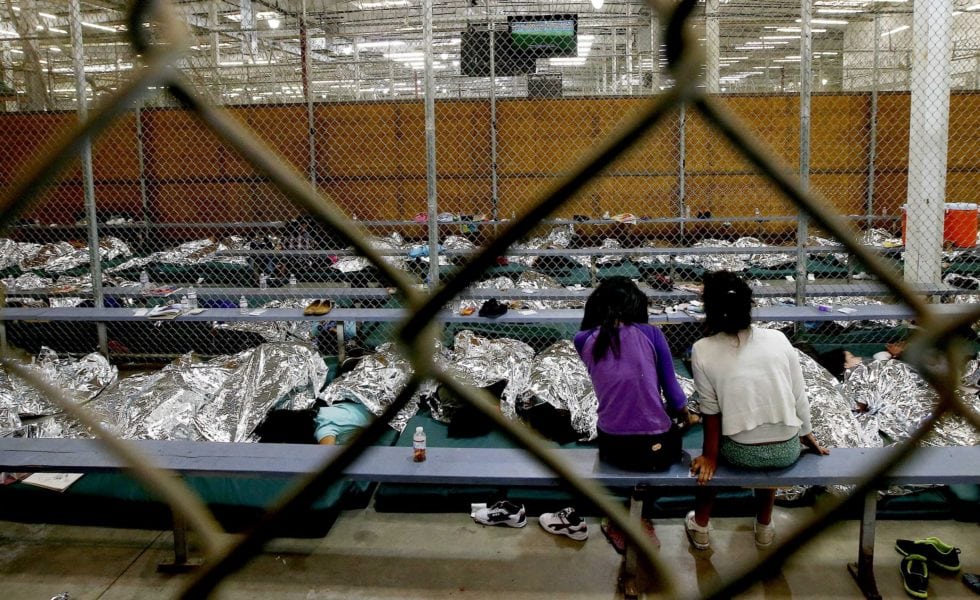
The current conditions within U.S. immigration detention facilities showcase a humanitarian crisis marked by systemic neglect and rising mortality rates.[41] These conditions implicate fundamental rights, including the rights to life, health, humane treatment, and freedom from cruel, inhuman, or degrading treatment.[42] Overcrowding within U.S. detention facilities has led to widespread disease, including seventy-nine influenza outbreaks across fifteen detention centers between 2019 and 2023.[43] As of January 4, 2026, at least 32 detainees have died in custody.[44]
These figures are not isolated incidents, but indicators of systemic failure within the detention system itself.[45] Overcrowding, inadequate medical care, and poor sanitation have become routine rather than exceptional.[46]
These humanitarian failures persist despite clear constitutional constraints governing civil detention.[47] Under the Fifth Amendment’s Due Process Clause, civil detainees, unlike convicted prisoners, may not be subjected to punitive conditions.[48] Accordingly, the government bears an affirmative obligation to ensure that detention conditions are reasonably related to legitimate governmental purposes.[49]
ICE maintains that its detention system complies with a rigorous set of standards designed to ensure detainee safety and access to healthcare.[50] Private, for-profit detention centers similarly assert their role in providing humane conditions.[51] However, continuous reports of denied medical treatment, delayed care, and failures to implement basic health measures reveal a starkly different reality.[52]
Overall, these conditions expose not only a humanitarian crisis, but a systemic attempt to remove constitutional and human rights protections within the immigration process, necessitating a broader examination of the framework that permits this illegal practice to continue.
III. Discussion
The presence of concentration camps in the United States demands a complete investigation of the human rights abuses and constitutional violations carried out by both government and private actors. As ICE expands its operations under its massive budget, the scope of these legal violations will only grow.[53] This section examines how immigration detention can be restructured through the OHCHR framework, alongside a renewed focus on the constitutional violations arising from arbitrary detention.
A. Reframing Detention Under the OHCHR Framework
Under the OHCHR’s standards, the 2026 U.S. immigration detention system falls within multiple categories of arbitrary detention, most notably Categories IV and V.[54] These categories provide a structured framework for evaluating the legality of modern immigration detention practices.[55]
Category IV addresses prolonged detention without meaningful judicial review.[56] The United States’ shift towards mandatory detention—and away from individualized, case-by-case judicial decisions—highlights the urgency of this concern.[57] Although immigration detention is formally classified as civil, it increasingly operates in a punitive manner.[58] Detainees are frequently held for extended periods of time without meaningful judicial review, access to counsel, bond hearings, or timely adjudication of their claims.[59] In this respect, Category IV aligns closely with constitutional due process protections.[60]
Category V prohibits detention on discriminatory grounds, including national or ethnic origin.[61] While immigration enforcement has been historically given broad judicial deference, the Constitution does not permit enforcement practices which are rooted in racial or ethnic discrimination.[62] Framing immigration detention through the OHCHR Category V’s framework, the analysis shifts beyond requiring proof of discriminatory intent and toward focusing on discriminatory outcomes.[63]
Arbitrary detention is often framed as a policy choice rather than as a violation of international and constitutional law.[64] The U.S. government relies heavily on the characterization of immigration detention as civil rather than punitive.[65] However, in practice, these detention systems produce conditions that align with the defining characteristics of concentration camps—detention based on status rather than criminal conduct.[66] Applying the OHCHR framework challenges this distinction by exposing how current practices function in violation of fundamental rights.[67]
While the OHCHR standards are not binding on U.S. courts, they reflect principles that closely parallel constitutional protections.[68] The framework does not impose new obligations; rather, it clarifies and reinforces rights that already exist but are underenforced.[69] Incorporating Categories IV and V framework into the legal analysis provides courts and legislators with a structured, internationally recognized basis for challenging current detention practices.[70]
B. Constitutional Violations and Korematsu’s Return
Beyond international law, modern immigration practices mimic one of the most widely condemned decisions in Supreme Court history: Korematsu v. United States.[71] While the Court has officially repudiated Korematsu, its underlying logic—which encouraged discrimination based on race and ethnicity in the name of national security—is resurfacing as the primary reasoning behind mass immigration detention.[72] Just as the incarceration of Japanese Americans was framed as a necessity during wartime, the modern expansion of detention centers uses the excuse of national security to bypass constitutional restraints.[73]
At the center of this issue, the Fourth Amendment’s protection against unreasonable searches and seizures is shifting to facilitate mass detention.[74] The enforcement practices at issue in Noem v. Perdomo initiate the detention process based on generalized characteristics such as race, ethnicity, language, occupation, and location. By framing these discriminatory factors together as reasonable suspicion, the Court provides a legal pathway that encourages the arbitrary, mass detention that Korematsu supported and that the Fourth Amendment intends to prohibit.[75]
Although the Supreme Court argues that these factors are enough collectively to establish reasonable suspicion, their inherently discriminatory nature undermines the legitimacy of that claim.[76] When reasonable suspicion is built upon discriminatory race-based factors, the suspicion ceases to be reasonable and instead becomes constitutionally suspect.[77] When constitutional protections are redefined to accommodate discriminatory enforcement practices, the system itself demands a fundamental structural change.
C. Pathways to Recover Decency
Addressing the structure of immigration detention in the United States requires more than slightly altered reforms; it demands the complete removal of concentration camps and a rethinking of immigration enforcement mechanisms.
First, Congress must eliminate mandatory detention provisions and restore case-by-case custody determinations. Judges should be trained in a neutral manner, with a strong presumption in favor of release for noncriminal detainees. Civil immigration detention is not intended to be a punishment; therefore, detention should be used only when absolutely necessary to address demonstrated risks of danger, not as a default administrative practice. The way forward as a nation is to treat humans with respect and grant them their constitutional rights, not by establishing a network of concentration camps with little to no regard for human life. By implementing respect-based reforms, the United States will better meet the constitutional due process rights and align its immigration system with international standards that prohibit arbitrary detention.
Second, meaningful access to legal counsel must be expanded.[78] Immigration proceedings are complex, time-consuming, and carry life-altering consequences, yet many detainees are forced to navigate the legal system without representation.[79] Guaranteeing access to counsel would help remove the systemic imbalance and allow detainees to meaningfully exercise their constitutional rights.[80]
Third, detention facilities must provide consistent and adequate medical care.[81] When the government detains individuals, it assumes the duty to provide medical treatment, disease prevention, and appropriate mental health services.[82] Current deficiencies in care demand immediate correction.[83]
Fourth, the United States must eliminate its contractual agreements with private, for-profit detention centers.[84] Profit-driven detention creates incentives to maximize detention for as long as possible while minimizing costs, often at the expense of basic human needs.[85] Removing profit from detention is a necessary step toward restoring integrity to the detention system.[86]
Fifth, the judiciary must reassert its role as a meaningful check on executive power. Decisions like Noem v. Perdomo, which permit unconstitutionally discriminatory enforcement practices, reflect the Court’s abdication of this responsibility.[87] Courts must instead reject overly broad interpretations of executive authority and rigorously enforce constitutional protections, particularly where individual liberties are at stake.[88]
Finally, transparency and accountability mechanisms must be significantly strengthened for ICE itself and in all detention facilities.[89] Independent oversight committees should be encouraged by Congress and the Department of Homeland Security to conduct unannounced inspections, investigate violations, and enforce compliance with legal standards.[90] Expanded public reporting requirements are also essential to ensure that detention center conditions remain visible and subject to scrutiny.[91] Without transparency and accountability, systemic abuses will persist unchecked.
IV. Conclusion
The expansion of mass civil detention centers in the United States represents a harrowing departure from the Constitution and international human rights obligations.[92] The Trump Administration’s desire for an unprecedented surge of deportations led to the recreation of concentration camps in the United States, filled with women, children, and noncriminal detainees.[93] Recognizing these facilities as concentration camps is neither rhetorical nor extreme; it is an accurate and necessary classification.[94] History warns that such concentration systems do not remain static.[95] Left unchecked, American concentration camps will expand in both scale and severity, inflicting increasingly significant harm on broader populations. The trajectory is not theoretical: it is well documented.[96]
The lessons of past injustices, from the establishment of the first German concentration camps to the incarceration of Japanese Americans, emphasize the consequences of silence and deference to these initial atrocities.[97] The reemergence of these patterns within the U.S. immigration system in the twenty-first century demands urgent attention. Immigration reform is both possible and necessary. The United States now faces a choice: uphold its constitutional and human rights commitments, or continue down a path that history has already condemned.
[1] Policy Brief | Snapshot of ICE Detention: Inhumane Conditions and Alarming Expansion, Nat’l Immigr. Just. Ctr. (Sept. 20, 2024), https://immigrantjustice.org/research/policy-brief-snapshot-of-ice-detention-inhumane-conditions-and-alarming-expansion/ [https://perma.cc/YSR8-JC6N] [hereinafter Snapshot of ICE Detention].
[2] Terminology and the Mass Incarceration of Japanese Americans during World War II, Nat’l Park Serv. (2021), https://www.nps.gov/articles/000/terminology-and-the-mass-incarceration-of-japanese-americans-during-world-war-ii.htm#:~:text=Scholars%20and%20stakeholders%20who%20have,in%20the%20Japanese%20American%20context. [https://perma.cc/6ESD-GTA4].
[3] David J. Bier, 65 Percent of People Taken by ICE Had No Convictions, 93 Percent No Violent Convictions, Cato Inst. (Jun. 20, 2025), https://www.cato.org/blog/65-people-taken-ice-had-no-convictions-93-no-violent-convictions#:~:text=As%20of%20June%2014%2C%20ICE,crime%20and%20broad%20crime%20categorization. [https://perma.cc/K7F4-ZKL7]; Immigration Detention Quick Facts, Transactional Rec. Access Clearinghouse, https://tracreports.org/immigration/quickfacts/#:~:text=68%2C289,see%20more%20data [https://perma.cc/7RRH-F62N] (last visited Mar. 22, 2026).
[4] Bier, supra note 3; Immigration Detention Quick Facts, supra note 3; Paul Ong, Jonathon Ong, & Sonja Diaz, Latino Ice Detentions Dramatically Reshaped Under Trump, UCLA Ctr. for Neighborhood Knowledge 1, 2 (2026), https://knowledge.luskin.ucla.edu/wp-content/uploads/2026/01/UCLA_CNK_Unseen_Latino_ICE_Detentions_Dramatically_Reshaped_Under_Trump_Jan2026.pdf [https://perma.cc/S9V9-63RR].
[5] About arbitrary detention: Working Group on Arbitrary Detention, U.N. Hum. Rts. Off. of the High Comm’r, https://www.ohchr.org/en/about-arbitrary-detention [https://perma.cc/NCH4-FRUD] (last visited Mar. 22, 2026) [hereinafter Arbitrary Detention].
[6] History of the United Nations, United Nations, https://www.un.org/en/about-us/history-of-the-un [https://perma.cc/WVY9-SY8E] (last visited Mar. 22, 2026); Terminology and the Japanese American Experience, Japanese Am. Nat’l Museum, https://www.janm.org/sites/default/files/2020-11/janm-education-resources-enduring-communities-terminology.pdf [https://perma.cc/2K6D-3PVF] (last visited Mar. 22, 2026) [hereinafter Terminology]; Dachau, U.S. Holocaust Memorial Museum (Oct. 16, 2024), https://encyclopedia.ushmm.org/content/en/article/dachau [https://perma.cc/JN3S-LCFZ].
[7] Terminology, supra note 6; Doug Most, Are ICE Detention Centers Concentration Camps?, BU Today (June 27, 2019), https://www.bu.edu/articles/2019/are-ice-detention-centers-concentration-camps/ [https://perma.cc/S3NE-9UUH].
[8] Most, supra note 7; Terminology, supra note 6.
[9] Muzaffar Chishti & Kathleen Bush-Joseph, With “Shock and Awe,” the Second Trump Term Opens with a Bid to Strongly Reshape Immigration, Migration Pol’y Inst. (Jan. 23, 2025), https://www.migrationpolicy.org/article/trump-second-term-begins-immigration [https://perma.cc/3ZJB-YG3U].
[10] Id.
[11] Ong, Ong, & Diaz, supra note 4.
[12] Id.
[13] Wong Wing v. United States, 163 U.S. 228 (1896).
[14] Wendy Sawyer, Brian Nam-Sonenstein, & Peter Wagner, Mass Incarceration: The Whole Pie 2026, Prison Pol’y Initiative (Mar. 11, 2026), https://www.prisonpolicy.org/reports/pie2026.html [https://perma.cc/TC9P-JHUN].
[15] Ong, Ong, & Diaz, supra note 4; José Olivares & Will Craft, Immigrants with no criminal record now largest group in Ice detention, The Guardian (Sept. 26, 2025), https://www.congress.gov/119/meeting/house/118692/documents/HMKP-119-JU00-20251118-SD001.pdf [https://perma.cc/4BQ8-GDFY].
[16] Make America Safe Again, Dept. of Homeland Security https://www.dhs.gov/making-america-safe-again [https://perma.cc/TBA7-TAN2] (last visited Apr. 12, 2026).
[17] Ong, Ong, & Diaz, supra note 4.
[18] Id.
[19] Id.
[20] Arbitrary Detention, supra note 5.
[21] Id.
[22] Id.
[23] Id.; Ong, Ong, & Diaz, supra note 4.
[24] Terminology, supra note 6.
[25] Id.
[26] Id.
[27] Most, supra note 7; Dachau, supra note 6.
[28] Most, supra note 7; Dachau, supra note 6. To be clear, this blog does not assert that the United States is committing genocide comparable to the Holocaust. Rather, it examines early warning signs, such as the establishment of concentration camps, as indicators that call for heightened vigilance and preventive measures against abuses.
[29] Dachau, supra note 6; Terminology, supra note 6.
[30] Id.
[31] Id.
[32] Korematsu v. United States, 323 U.S. 214 (1944).
[33] Korematsu v. United States, 323 U.S. 214 (1944); see generally Perdomo, 146 S. Ct. 1.
[34] Perdomo, 146 S. Ct. at 13 (Sotomayor, J., dissenting).
[35] Id.
[36] Id.
[37] Id.
[38] Id.
[39] Id. at 6-7.
[40] Ong, Ong, & Diaz, supra note 4; Universal Declaration of Human Rights, G.A. Res. 217 (III) A, U.N. Doc. A/RES/217(III) (Dec. 10, 1948); U.S. Const. amend. V; U.S. Const. amend. VIII; U.S. Const. amend. XIV.
[41] Ong, Ong, & Diaz, supra note 4.
[42] Id.
[43] Ribhav Gupta, Dean L. Winslow, Ronit Gupta, et al., Epidemiology of three vaccine-preventable infectious diseases within United States immigration detention centers, 2019 through 2023, 13 Open Forum Infectious Diseases 1 (2026), https://pmc.ncbi.nlm.nih.gov/articles/PMC12792285/ [https://perma.cc/Y9KY-BU6D].
[44] Ong, Ong, & Diaz, supra note 4.
[45] Id.
[46] Id.
[47] Id.
[48] U.S. Const. amend. V.
[49] Id.
[50] Detention Management, U.S. Immigr. and Customs Enf’t https://www.ice.gov/detain/detention-management [https://perma.cc/AB3E-3E8M] (last visited Mar. 23, 2026); 4.3 Medical Care, U.S. Immigr. and Customs Enf’t https://www.ice.gov/doclib/detention-standards/2011/4-3.pdf [https://perma.cc/UPQ4-5JCJ] (last visited Mar. 23, 2026).
[51] Isabel Mohyeddin, The 2025 Reconciliation Bill Allows Private Prison Execs to Cash In on Cruelty, Nat’l Immigr. Just. Ctr. (Dec. 18, 2025), https://www.nilc.org/articles/the-2025-reconciliation-bill-allows-private-prison-execs-to-cash-in-on-cruelty/ [https://perma.cc/9TYG-FXVV].
[52] Id.; Amanda Watford, For-profit immigration detention expands as Trump accelerates his deportation plans, Stateline (Apr. 11, 2025), https://stateline.org/2025/04/11/for-profit-immigration-detention-expands-as-trump-accelerates-his-deportation-plans/ [https://perma.cc/N8T9-YEMQ].
[53] Id.
[54] Arbitrary Detention, supra note 5.
[55] Id.
[56] Id.
[57] Id.
[58] Sawyer, Nam-Sonenstein, & Wagner, supra note 15.
[59] Id.
[60] U.S. Const. amend. V; Arbitrary Detention, supra note 5.
[61] Arbitrary Detention, supra note 5.
[62] Id.
[63] Id.
[64] Xinhua News Agency, The United States’ Arbitrary Detention at Home and Abroad: Truth and Facts, Embassy of the People’s Republic of China in Geor. (Mar. 29, 2023), https://ge.china-embassy.gov.cn/eng/xwdt/202303/t20230329_11050916.htm#:~:text=Arbitrary%20detention%20occurs%20when%20an,to%20arbitrary%20arrest%20or%20detention. [https://perma.cc/5EDU-J3B5].
[65] Id.
[66] Terminology, supra note 6.
[67] See Arbitrary Detention, supra note 5.
[68] Id.
[69] Id.
[70] Id.
[71] See Korematsu, 323 U.S. 1; see also Perdomo, 146 S. Ct. 1.
[72] Perdomo, 146 S. Ct. at 8 (Sotomayor, J., dissenting).
[73] Id.
[74] Id.
[75] U.S. Const. amend. IV; see Korematsu, 323 U.S. 1; Perdomo, 146 S. Ct. at 6-8 (Sotomayor, J., dissenting).
[76] Perdomo, 146 S. Ct. at 6 (Sotomayor, J., dissenting).
[77] Id.
[78] Access to Counsel, Nat’l Immigr. Just. Ctr., https://immigrantjustice.org/issues/immigrants-need-access-to-counsel/ [https://perma.cc/QGE7-K64E] (last visited Mar. 23, 2026).
[79] Id.
[80] Id.
[81] Clara Long & Grace Meng, Systemic Indifference: Dangerous & Substandard Medical Care in US Immigration Detention, Hum. Rts. Watch (May 8, 2017), https://www.hrw.org/report/2017/05/08/systemic-indifference/dangerous-substandard-medical-care-us-immigration-detention [https://perma.cc/7T4N-3C2F].
[82] Id.
[83] Id.
[84] Policy Brief | Cut the Contracts: It’s Time to End ICE’s Corrupt Detention Management System, Nat’l Immigr. Just. Ctr. (Mar. 16, 2021), https://immigrantjustice.org/research/policy-brief-cut-the-contracts-its-time-to-end-ices-corrupt-detention-management-system/#:~:text=The%20Department%20of%20Homeland%20Security,protocols%20as%20the%20system%20expands. [https://perma.cc/F52A-VXB3].
[85] Id.
[86] Id.
[87] Perdomo, 146 S. Ct. at 6-8 (Sotomayor, J., dissenting).
[88] Id.
[89] Messages and Chilling Accounts From Inside Immigration Detention Facilities Show Urgent Need for Legislation to Strengthen State Oversight, Pub. Couns. (Mar. 6, 2026), https://publiccounsel.org/press-releases/messages-and-chilling-accounts-from-inside-immigration-detention-facilities-show-urgent-need-for-legislation-to-strengthen-state-oversight/ [https://perma.cc/E3FV-BU9P].
[90] Id.
[91] Id.
[92] Policy Brief, supra note 81; U.S. Const. amend. V; U.S. Const. amend. VIII; U.S. Const. amend. XIV.
[93] Snapshot of ICE Detention, supra note 1; Sawyer, Nam-Sonenstein, & Wagner, supra note 15.
[94] Snapshot of ICE Detention, supra note 1; Terminology, supra note 6; Most, supra note 7.
[95] Id.
[96] Id.
[97] Dachau, supra note 6; 323 U.S. 214; 146 S. Ct. 1.