
Kitty McMaster, Associate Member, Immigration and Human Rights Law Review
I. Introduction
In Xinjiang, China has built a system of mass detention, surveillance, and coercive control directed at Uyghurs and other predominantly Muslim minorities.[1] China describes these measures as counterterrorism and vocational education, yet the available evidence shows a system reaching far beyond ordinary security enforcement and instead targeting a protected ethnic group through discriminatory detention, restrictions on religion and movement, and pressure to conform to state-approved norms.[2] A government may try to reframe its detention of certain individuals as “training,” but international human rights law requires a deeper examination into what that so-called detention system actually does, rather than simply relying on what a state calls it.
This Blog argues that China’s policies in Xinjiang violate Articles 1, 2, and 5 of the International Convention on the Elimination of All Forms of Racial Discrimination (“ICERD”). Part II provides background on Xinjiang, the Uyghurs, and China’s legal obligations under ICERD. Part III then explains how China’s treatment of Uyghurs in Xinjiang violates Articles 1, 2, and 5 of the ICERD, and why legal accountability remains difficult even when the treaty violations are clear. Finally, Part IV concludes by arguing that weak enforcement does not make the violations any less real; rather, it emphasizes the need for sustained international and private-sector pressure.
II. Background
A. Xinjiang, Uyghurs, and China’s System of Control
Xinjiang sits at China’s far northwestern border region, a vast territory that lies closer geographically and historically to Central Asia than to Beijing.[3] Taking up one-sixth of China and bordering eight countries, including Afghanistan, Pakistan, and Kazakhstan, the region remains strategically significant to the Chinese state because of its size, location, and economic value.[4] Xinjiang is also home to more than 11 million Uyghurs, a predominantly Muslim, Turkic-speaking ethnic group whose language, religion, and cultural traditions distinguish them from the Han Chinese majority, the largest ethnic group in China.[5] These geographic and demographic features help explain why Xinjiang has become a site of acute political sensitivity for Beijing.[6] Because the region lies at China’s western frontier and is home to a distinct ethnic minority, Chinese authorities have frequently treated Uyghur identity, religious practice, and demands for greater autonomy as threats to territorial integrity and state control.[7]
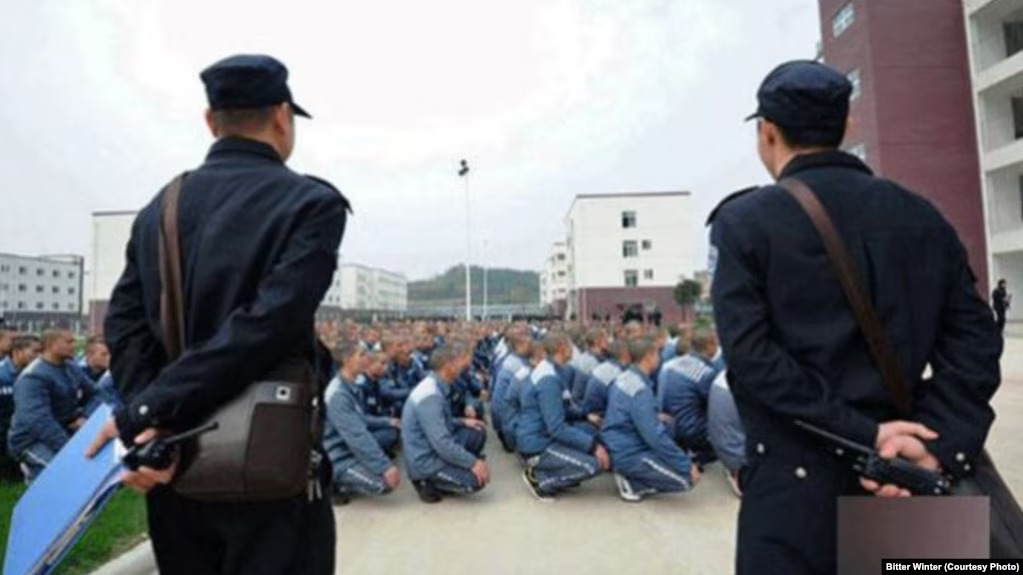
Since 2017, China has engaged in a sweeping crackdown across the Xinjiang region, but has consistently defended its actions as a program of counterterrorism and “vocational education and training centers.[8] ” Yet, outside observers characterize China’s action as mass detention and coercive social control.[9] More than one million Uyghurs and other Muslim minorities have reportedly been detained in camps by the Chinese government.[10] Furthermore, many others Uyghurs outside the camps have been subjected to intense surveillance, religious restrictions, family separation, and forced sterilizations.[11]
B. China’s Treatment of Uyghurs in Xinjiang
Han Chinese are the majority ethnic group in China, accounting for 90% of the national population.[12] Uyghurs, by contrast, are a distinct ethnic minority concentrated in Xinjiang.[13] They are a Turkic-speaking people, and many Uyghurs in Xinjiang are Sunni Muslims.[14] The difference between these two groups is therefore not merely geographic, but also ethnic, linguistic, and religious.[15] Uyghurs make up 46% of Xinjiang population.[16]
The legality of China’s treatment of Uyghurs largely stems from the manner in which the Chinses state treats the Uyghur population.[17] China defends the camps in which they detain Uyghur individuals as lawful “vocational education and training centers” designed to combat terrorism and religious extremism, portraying them as a form of education and rehabilitation rather than punishment.[18] The U.N. Human Rights Office, however, reached a much darker conclusion.[19] In its 2022 report, the Office of the U.N. High Commissioner for Human Rights (“OHCHR”) explained that the legal framework behind China’s purported anti-terrorism policies implemented in Xinjiang is vague, broad, and prone to arbitrary and discriminatory application, concluding that the Chinese government subjected Uyghurs in the region to a continued pattern of large-scale arbitrary detention, along with severe restrictions on religion, movement, privacy, and expression.[20] Inside the camps, detainees were not just housed or trained; they underwent coercive political re-education.[21] Reports indicate that individuals were detained involuntarily without any criminal charges.[22] They were subjected to mandatory Chinese language instruction and prohibited from using Uyghur and other minority languages.[23] Furthermore, detainees were forced to express praise for the Chinese Communist Party, participate in self-criticism sessions, and face punishment for engaging in ordinary religious practices such as praying or growing a beard.[24] The harm is not only physical detention; it becomes forced assimilation and identity-based persecution.[25]
C. ICERD and China’s Obligations in Xinjiang
Other U.N. bodies have translated the OHCHR’s concerns into treaty-specific obligations. Specifically, the Committee on the Elimination of Racial Discrimination (“CERD”) is an independent body of experts responsible for monitoring State parties’ implementation of the ICERD.[26] CERD’s work reflects a basic reality: racial discrimination remains a serious barrier to the protection of human rights, and unequal treatment based on race, color, descent, or national or ethnic origin continues to cause exclusion, suffering, and conflict.[27]
China became a party to the ICERD by accession on December 29, 1981, which means the Convention provides an important legal framework for evaluating China’s conduct in Xinjiang.[28] China is legally bound under international law to comply with CERD in good faith and to ensure that public authorities do not engage in racial or ethnic discrimination.[29] Article 1 sets out the Convention’s basic definition of racial discrimination, covering distinctions, restrictions, or preferences based on race, descent, or national or ethnic origin that interfere with equal enjoyment of rights.[30] Article 2 imposes a duty on states not only to avoid discrimination themselves, but also to ensure that public authorities do not engage in it, and to revise laws or policies that maintain unequal treatment.[31] Article 5 makes the obligations set forth in Article 2 more concrete by protecting equal enjoyment of specific rights, including personal security, freedom of movement, freedom of thought and religion, freedom of expression, and participation in cultural life.[32]
III. Discussion
China’s policies in Xinjiang do more than raise general human rights concerns: they violate specific prohibitions under ICERD. Through the camp system and related surveillance regime, China identifies Uyghurs and other predominantly Muslim minorities as security threats, subjects them to detention and intrusive monitoring, and restricts their religion, movement, and expression. This section explains how China’s actions against the Uyghurs explicitly violate its human rights obligations under the ICERD, specifically rights and duties set forth in Article 1, Article 2, and Article 5. This section also examines the legal solutions available when a state clearly violates its treaty obligations, but weak enforcement limits accountability.
A. Targeting Uyghurs: A Violation of ICERD Article 1
ICERD Article 1 prohibits State parties from enacting distinctions, restrictions, or preferences based on race, descent, or national or ethnic origin when they impair equal enjoyment of rights.[33] Evidence of an Article 1 violation demands more than merely showing that a policy targeted at a certain group is harmful.[34] Rather, evidence must be presented that the policy is connected to a protected ground, such as ethnic origin, and interferes with that group’s equal enjoyment of rights.[35]
Measured against this standard, China’s Xinjiang camp system constitutes ethnic discrimination because it does not operate neutrally across the population.[36] Instead, Chinese authorities single out Uyghurs and other predominantly Muslim minorities for detention, surveillance, and coercive control.[37] The OHCHR assessment explains that the legal framework behind Xinjiang’s anti-extremism campaign rests on vague and broad concepts such as terrorism, extremism, and threats to social order, gives officials wide discretion who should be investigated, referred, or confined, and remains vulnerable to arbitrary and discriminatory application.[38] In practice, that framework does not exclusively regulate violent conduct such as riots and attacks.[39] Instead, it reaches conduct closely tied to Uyghur identity, including ordinary religious and cultural expression, or personal choice.[40] For example, indicators of alleged “extremism” that the State uses to justify detention includes conduct that amounts to nothing more than ordinary Islamic religious practice, cultural preference, or personal choice, such as rejecting television and engaging with religious materials.[41] These practices create a system in which members of a protected ethnic minority are arbitrarily detained for conduct that often does not extend to the Han majority.[42]
The referral criteria make the discriminatory structure even clearer. OHCHR concluded that placements in the camps were, “in large measure,” based on ethnic, religious, and cultural identity and expression, meaning that officials could send people to detention because they prayed, dressed, spoke, or associated in ways the state linked to Uyghur and Muslim identity.[43] China’s systematic use of these measures to target Uyghurs and other predominantly Muslim minorities therefore demonstrates a deliberate and legally significant pattern of ethnic discrimination that squarely violates ICERD Article 1.[44]
B. State-Sponsored Discrimination: A Violation of ICERD Article 2
In addition to Article 1’s broad ban on ethnic discrimination, ICERD Article 2 explicitly prohibits the use of state-sanctioned discrimination.[45] It requires states not to sponsor, defend, or institutionalize racial discrimination through their own public authorities and public institutions.[46] China violates ICERD Article 2 because discrimination in Xinjiang is embedded in a state-designed and state-administered system of camps, surveillance, and official restrictions on religion and movement, rather than isolated acts by rogue officials.[47] Police, prosecutors, courts, and other state officials were given expansive powers to collect personal and biometric data, use electronic surveillance, impose movement restrictions, and transfer people into detention camps.[48]
Moreover, transfers into detention camps are not voluntary: interviewees report that they were taken there by public security officials, given no real choice, denied access to lawyers, unable to challenge their placement, and unable to leave.[49] The detention camps also served a broader assimilative purpose, as they placed a strong emphasis on “political teachings” and “self-criticism.”[50] Former detainees report being barred from using their own language or practicing their religion while confined.[51] Detainees in the dorms or cells had to take two-hour night shifts to monitor whether other detainees were praying or breaking rules at night.[52] The camp system did more than hold people in custody—it sought to completely reshape Uyghurs’ conduct and expression.[53]
China’s actions in Xinjiang demonstrate that the core problem under Article 2 lies not in incidental discriminatory outcomes, but in the state’s intentional creation, design, and execution of the policies producing those outcomes..[54] China’s treatment of the Uyghurs in Xinjiang is best understood as a case in which public authorities actively institutionalize, rather than prevent, ethnic discrimination.[55]
C. Denial of Equal Rights: China’s Violation of ICERD Article 5
ICERD Article 5 requires states to guarantee the equal enjoyment of basic rights without ethnic discrimination.[56] In Xinjiang, the Chinese government not imposes differential treatment on Uyghurs, but also directly deprives them of rights secured under the Convention.[57] The state’s restriction of the Uyghurs’ rights reach far beyond detention and infringe upon individuals’ ability to enjoy daily life
The extreme scope of these restrictions details the breadth of China’s Article 5 violations. China has enacted pervasive controls even on the movement of Uyghurs, including security checkpoints, convenience police stations, phone inspections, electronic surveillance, and passport confiscation that limits Uyghurs’ ability to travel and move freely.[58] Moreover, the state has enacted severe limitations on Uyghurs’ religious and cultural expression, often justified through overbroad and vague definitions of “extremism.”[59] Conduct such as wearing “irregular” beards, refusing “public goods and services” such as radio and television, or engaging in ordinary Islamic religious practice could trigger coercive state response such as “deradicalization” and “re-education.”[60] Accordingly, China’s policies have discriminatorily restricted Uyghurs’ use of their language and interfered with their cultural and religious life.[61] Taken together, these measures do not simply regulate security threats; they burden the ordinary movement, worship, and cultural expression of a protected ethnic minority, thereby violating the guarantees that Article 5 requires China to uphold.[62]
D. From Treaty Violations to Accountability: Legal Solutions and Enforcement Mechanisms
The legal solution to the Uyghur human rights crisis must target the structure that made the violations possible, not merely ask China to “comply” in general terms.[63] China’s counterterrorism and “extremism” framework uses broad official discretion of who should be investigated and confined, thus creating a system vulnerable to arbitrary and discriminatory application against Uyghurs and other predominantly Muslim minorities.[64] Meaningful compliance would therefore require China to release those arbitrarily detained, disclose the whereabouts of missing family members, repeal discriminatory laws and policies, and investigate allegations of torture, sexual violence, forced labor, and deaths in custody.[65] It would also require surveillance controls grounded in legality, necessity, proportionality, and accountability, because broad public-security powers and invasive monitoring threaten privacy, movement, and respect of non-discrimination.[66]
Internal assurances alone are not enough when detainees lack a clear independent mechanism to appeal placement decisions or report abuse.[67] Outside review should therefore become part of the remedy, including unrestricted country visits by UN human rights mechanisms focused on enforced disappearances, arbitrary detention, torture, minority rights, religious freedom, cultural rights, and business and human rights.[68] Non-state actors also have a role: businesses through their activities or business relationships should conduct enhanced human-rights due diligence, especially surveillance and security companies whose products or services may affect privacy, freedom of movement, and nondiscrimination.[69] These steps move the response from abstract condemnation to concrete pressure: release, repeal, investigation, outside monitoring, business due diligence, and protection for victims who remain outside China.[70]
IV. Conclusion
China’s extreme actions against the Uyghurs in Xinjiang violate a host of human rights principles as well as specific rights enumerated in in the ICERD.[71] By targeting Uyghurs and other predominantly Muslim minorities through mass detention, intrusive surveillance, restrictions on religion and movement, and coercive efforts to regulate daily life, China has gone far beyond neutral law enforcement and imposed discriminatory burdens on a protected ethnic group.[72]
Xinjiang’s crisis also reveals a deeper weakness in international human rights law: identifying a treaty violation does not guarantee meaningful enforcement. China is unlikely to change course simply because treaty bodies or U.N. officials say it should. Nevertheless, these shortcomings do not make ICERD irrelevant. The ICERD provides the legal language to name the violations, the framework to measure China’s conduct, and the basis for continued pressure by international institutions, states, and private actors.[73] The legal solution must move beyond abstract compliance by requiring China to dismantle the legal, surveillance, and detention systems enabling the abuses while allowing outside monitoring and business due diligence to create meaningful accountability.[74]
[1] Off. of the U.N. High Comm’r for Hum. Rts., OHCHR Assessment of Human Rights Concerns in the Xinjiang Uyghur Autonomous Region, People’s Republic of China 1-3 (Aug. 31, 2022), https://www.ohchr.org/sites/default/files/documents/countries/2022-08-31/22-08-31-final-assesment.pdf [https://perma.cc/ZTR2-ZYM9] [hereinafter OHCHR Assessment].
[2] Id. at 6-9.
[3] Lindsay Maizland, China’s Repression of Uyghurs in Xinjiang, Council on Foreign Rels. (Oct. 3, 2025, 12:28 PM), https://www.cfr.org/backgrounders/china-xinjiang-uyghurs-muslims-repression-genocide-human-rights [https://perma.cc/UD8F-5BHF].
[4] Id.
[5] Id.
[6] Id.
[7] Id.
[8] Id.
[9] Id.
[10] Id.
[11] Id.
[12] Ethan Teekah, Han Chinese, Britannica (Mar. 22, 2026), https://www.britannica.com/topic/Han-Chinese [https://perma.cc/G3JR-92UJ].
[13] Britannica Editors, Uyghur, Britannica (Apr. 4, 2026), https://www.britannica.com/topic/Uyghur [https://perma.cc/A7VF-T6LQ].
[14] Id.
[15] Id.
[16] Human Rights Watch & Stanford Law School Human Rights & Conflict Resolution Clinic, “Break Their Lineage, Break Their Roots”: China’s Crimes Against Humanity Targeting Uyghurs and Other Turkic Muslims 2 (Apr. 2021), https://www.hrw.org/sites/default/files/media_2021/04/china0421_web_2.pdf [https://perma.cc/7XKJ-GBWN].
[17] OHCHR Assessment, supra note 1, at 43–45.
[18] Id. at 4-9.
[19] Id. at 11.
[20] Id.
[21] Id. at 25-26.
[22] Id. at 12-13.
[23] Id. at 25-26.
[24] Id.
[25] Id.
[26] Committee on the Elimination of Racial Discrimination, OHCHR, https://www.ohchr.org/en/treaty-bodies/cerd [https://perma.cc/BG5A-KNUU] (last visited Apr. 11, 2026).
[27] Id.
[28] Ratification Status for China, U.N. Treaty Body Database,., https://tbinternet.ohchr.org/_layouts/15/TreatyBodyExternal/Treaty.aspx?CountryID=36&Lang=EN [https://perma.cc/LGZ4-UAU5] (last visited Apr. 11, 2026).
[29] Id.
[30] General Assembly resolution 2106 (XX), International Convention on the Elimination of All Forms of Racial Discrimination, Office of the United Nations High Commissioner for Human Rights, U.N. Doc. A/RES/2106 (Feb. 21, 1965) [hereinafter ICERD].
[31] Id. art. 2
[32] Id. art 5.
[33] Id. art 1.
[34] Id.
[35] Id.
[36] OHCHR Assessment, supra note 1, at 43–45.
[37] Id.
[38] Id. at 10–12, 43–44.
[39] Id. at 6–7.
[40] Id. at 9.
[41] Id. at 7.
[42] Id. at 8–10.
[43] Id. at 8–9, 16.
[44] Id.; ICERD, supra note 30.
[45] ICERD, supra note 30, art. 2.
[46] Id.
[47] OHCHR Assessment, supra note 1, at 11–13.
[48] Id. at 10.
[49] Id. at 10–11.
[50] Id. at 16.
[51] Id. at 22.
[52] Id.
[53] Id. at 16–22.
[54] Id. at 13.
[55] Id. at 8-11
[56] ICERD, supra note 30, art. 5.
[57] OHCHR Assessment, supra note 1, at 11–40.
[58] Id. at 30-32.
[59] Id. at 30-31.
[60] Id. at 7 – 9.
[61] Id. at 22.
[62] Id. at 11–40.
[63] Id. at 43 – 44.
[64] Id. at 10 – 11.
[65] Id. at 43 – 46.
[66] Id. at 44 – 45.
[67] Id. at 23.
[68] Id. at 45.
[69] Id.
[70] Id. at 43 – 46.
[71] ICERD, supra note 30.
[72] See ICERD, supra note 30; OHCHR Assessment, supra note 1.
[73] See ICERD, supra note 30; OHCHR Assessment, supra note 1.
[74] OHCHR, supra note 1, at 30–32, 43–46.